Key takeaway
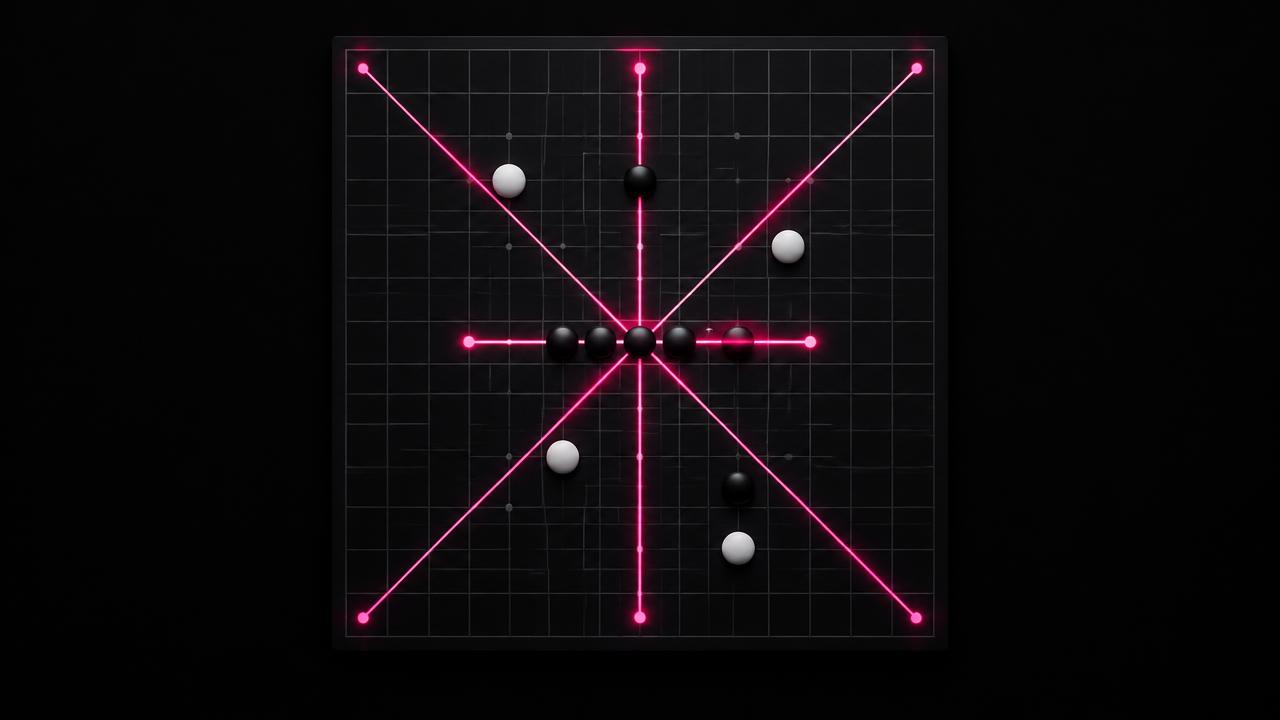
All three are line-making games, but Gomoku's large 15×15 board and free placement give it far more depth than tic-tac-toe or Connect Four.
In this article
- Tic-tac-toe
- Connect Four
- Gomoku
- Side-by-side comparison
- Why play Gomoku
- How deep is each game?
- Skills that transfer from Connect Four
- Which game for which player?
- Try it yourself
- Strategy compared, move by move
- Learning curve
- Game length and pace
- Which is best for teaching strategy?
- Variations worth knowing
- Our recommendation
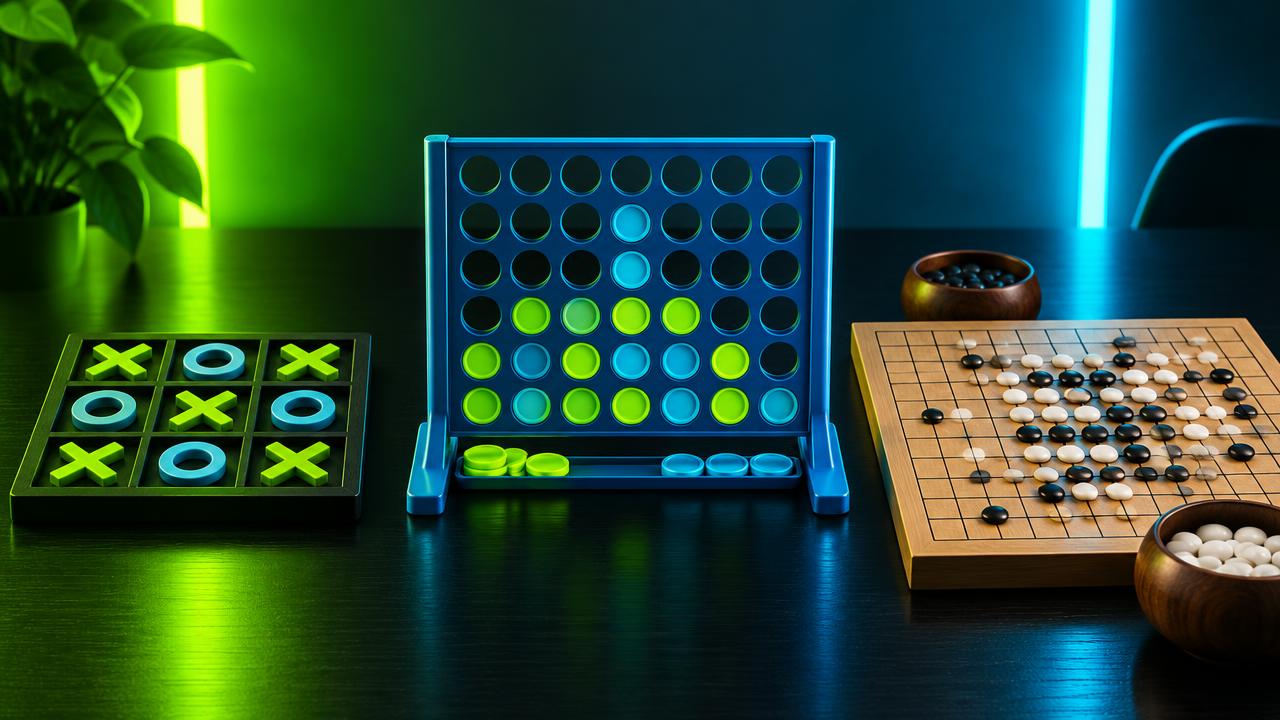
All three are line-making games, but they play very differently.
Tic-tac-toe
Three in a row on a 3×3 grid. With perfect play every game is a draw, which is why adults rarely play it for long.
Connect Four
Four in a row on a 7×6 grid, with gravity: pieces drop to the lowest open slot. It has real strategy, but the limited board keeps games short.
Gomoku
Five in a row on a 15×15 board, with stones placed anywhere. The huge board and free placement give Gomoku the depth of a classic strategy game while keeping rules a child can learn in a minute.
Side-by-side comparison
Why play Gomoku
If you like Connect Four, you will love Gomoku. Start a game against the computer and see.
How deep is each game?
Tic-tac-toe has fewer than 6,000 legal positions, so anyone can memorize perfect play. Connect Four has trillions of positions but was fully solved in 1988: the first player wins with perfect play. Freestyle Gomoku on 15×15 was proven a first-player win in the 1990s, yet the winning lines are so long and complex that no human can play them from memory. In practice, games between people are decided by who spots threats faster.
Skills that transfer from Connect Four
What does not transfer is gravity. In Gomoku you can play anywhere, so threats can appear in any part of the board, not just at the top of a column.
Which game for which player?
Try it yourself
Play one game of Gomoku using only the center 7×7 area of the board. It feels close to Connect Four. Then play a normal game and notice how much more space you have to build double threats.
Strategy compared, move by move
In tic-tac-toe, the first move decides almost everything. Taking the center or a corner is enough to guarantee at least a draw, and the rest of the game is avoiding one obvious mistake. There is very little room for creativity, which is why the game feels solved after a few rounds.
Connect Four adds gravity, and gravity creates a special kind of strategy called zugzwang. Because you can only play in the lowest open slot of a column, you sometimes have to make a move that gives your opponent a winning square above it. Good Connect Four players count which rows their threats sit on, odd or even, and try to force their opponent to fill the square under their threat.
Gomoku has no gravity, so zugzwang barely exists. Instead, the game is about tempo. Each forcing move, a three or a four, takes away your opponent's freedom for one turn. The player who can chain forcing moves together, called a victory by continuous attack, wins. That makes Gomoku feel more like a race of threats than a puzzle of columns.
Learning curve
Game length and pace
A tic-tac-toe game takes seconds. Connect Four usually ends within 20 to 30 moves because the board fills. A Gomoku game between beginners often lasts 30 to 50 moves, and between strong players it can end much sooner, because one side finds a forcing sequence early. On Gomoku.now, a casual game against the computer typically takes five to ten minutes.
Which is best for teaching strategy?
Teachers often start with tic-tac-toe to explain turns and blocking, then move to Gomoku to explain planning. Gomoku is especially good for teaching the idea of multiple threats: students quickly learn that one threat is easy to block but two at once cannot be stopped. That lesson applies to chess, Go and many other games.
Variations worth knowing
Pente is a close relative of Gomoku that adds captures: flanking two opposing stones removes them. Connect6 asks for six in a row but lets each player place two stones per turn, which balances the game. Both are worth trying once you are comfortable with Gomoku, and both show how small rule changes can transform strategy.
Our recommendation
If you enjoy tic-tac-toe or Connect Four but want something with more room to think, Gomoku is the natural next step. Start with a few games against the Easy computer to get used to the larger board. Pay attention to diagonal lines, which beginners coming from Connect Four often overlook. Once you can win regularly, play a friend in an online room and compare how differently people and computers attack. Many players find that after a week of Gomoku, going back to Connect Four feels small, because they are used to planning several threats at once across a much bigger space. That planning skill is the real reward of learning five in a row, and it carries over to almost every other strategy game you play.
Ready to try it? Start a free game against the computer on Gomoku.now and see how much bigger five in a row feels.
Frequently asked questions
Is Gomoku harder than Connect Four?
Yes. The bigger board and free placement create many more possible positions.
Is Gomoku the same as five in a row?
Yes. Gomoku, five in a row and Gobang are names for the same game.
Is Gomoku harder than Connect Four?
Yes. Gomoku's 225-point board and free placement create far more possible positions and tactics than Connect Four's 42 slots.
Is Gomoku solved?
Freestyle Gomoku on 15×15 has been proven a win for the first player, but the winning strategy is far too complex for people to memorize.
Put it into practice
Try these ideas against the computer or a friend.
Editorial standards and sources
Rules depend on the variant being played. Worked examples are study positions, and computer suggestions are not proofs of perfect play. Consult the linked rule sources when checking a disputed position.
Topics
Share this article
Read about the editorial byline, source selection and how to report a correction. Cover artwork is illustrative, not a record of the example position.