Key takeaway
Different names can lead to the same five-in-a-row objective, but always confirm board size, overline rules and any forbidden moves before playing.
In this article
- Start with the shared five-in-a-row idea
- What the different names can tell you
- Check whether longer lines count
- Ask about double threats and forbidden moves
- Confirm the board and playing area
- Clarify the opening procedure
- Separate Gomoku from other line-making games
- Transfer tactics only after checking the variant
- Use a short agreement before a friend game
You might search for Gobang, Omok, Wuziqi or five in a row and find boards that look like Gomoku. That is not necessarily a search mistake. The International Computer Games Association includes these names in its overview of the Go-Moku family. People encounter the game through different languages, local traditions and software, so a familiar objective can arrive under an unfamiliar label.
The important caution is that a name does not guarantee every detail of the rules. Two games with the same label can handle overlines differently. Two games with different labels can use the same casual rules. Rather than trying to settle every game by its title, check the objective, playing area, opening procedure and restrictions before your first move.
Start with the shared five-in-a-row idea
The recognizable core is alternating placement of two colors of stones on a grid, aiming to build a qualifying uninterrupted line of five. Horizontal, vertical and diagonal lines are central to ordinary Gomoku play. A gap or an opposing stone interrupts the line. That basic idea explains why the different names often lead to similar-looking boards and tactics.
For a simple example, Black at f8, g8, h8 and i8 can complete five at j8 if that point is empty and the selected rules allow the result. You do not need to know which name your opponent learned first to understand the threat. You do need agreement on what counts as a qualifying line and whether any special rule affects the move.
What the different names can tell you
Gomoku is a widely used name for the five-in-a-row game. Gobang is another name commonly encountered in the same family. Omok and Wuziqi appear in the ICGA's list of names as well. Those associations are useful when searching for a game or talking with someone who learned it under a different title.
They are not a substitute for a rules page. Avoid assuming that every Omok app or Wuziqi board has the same forbidden-move rules, opening choices or online features. A title identifies a tradition or family more readily than it specifies a complete implementation. When in doubt, ask what a line of six does and which moves are prohibited.
Check whether longer lines count
Freestyle Gomoku awards a win for five or more consecutive stones. Standard exact-five rules require exactly five. A line of six, called an overline, therefore has a different result depending on the variant. Renju has another important distinction: an overline is forbidden for Black, while White is not subject to that same restriction.
Imagine Black at d8, e8, f8, h8 and i8 with g8 empty. Filling g8 connects six consecutive Black stones from d8 through i8. It is a freestyle win, but not an ordinary exact-five win. This single example is a quick way to reveal whether two players are assuming different rules despite using a shared name.
Ask about double threats and forbidden moves
In freestyle, a move that creates multiple useful threats can be a strong legal tactic. In Renju, Black is restricted from certain double fours and qualifying double threes, along with overlines. A visually similar position can therefore produce a different legal decision. Color and the detailed definitions matter, not merely the appearance of a fork.
If your opponent mentions a double-three rule, ask how it is evaluated and where the complete rules are written. Renju's real-three assessment depends on legal continuations to a straight four; it is not simply a count of three-looking shapes. For a friendly game, clear agreement before play is better than arguing about a surprising move after both players have invested time.
Confirm the board and playing area
A 15 by 15 board is a common modern format and the one used on Gomoku.now. Five-in-a-row games can also be played on other grids, including part of a larger physical board. More space changes continuation possibilities and the number of distant options. It does not change the need to create the agreed winning line.
On a shared physical set, mark the active boundaries before starting. If you use grid paper, count the playable points carefully and decide whether stones or marks sit on intersections or squares. The representation can differ while preserving the same logical positions. What matters is that both players see the same available points and do not change them during the game.
Clarify the opening procedure
A casual game may begin with Black placing one stone and White replying. Tournament Gomoku can use a color-selection procedure such as Swap2. These are not the same starting process. In Swap2, the initial player proposes three stones and the other player has choices about color or adding two more stones before a later color decision.
Do not assume that an app using the name Gobang will support a tournament opening merely because you have seen it in another Gomoku game. Read the stated options. On Gomoku.now, the ordinary board begins with normal alternating placement; the educational article about Swap2 is not a claim that the site runs that opening procedure automatically.
Separate Gomoku from other line-making games
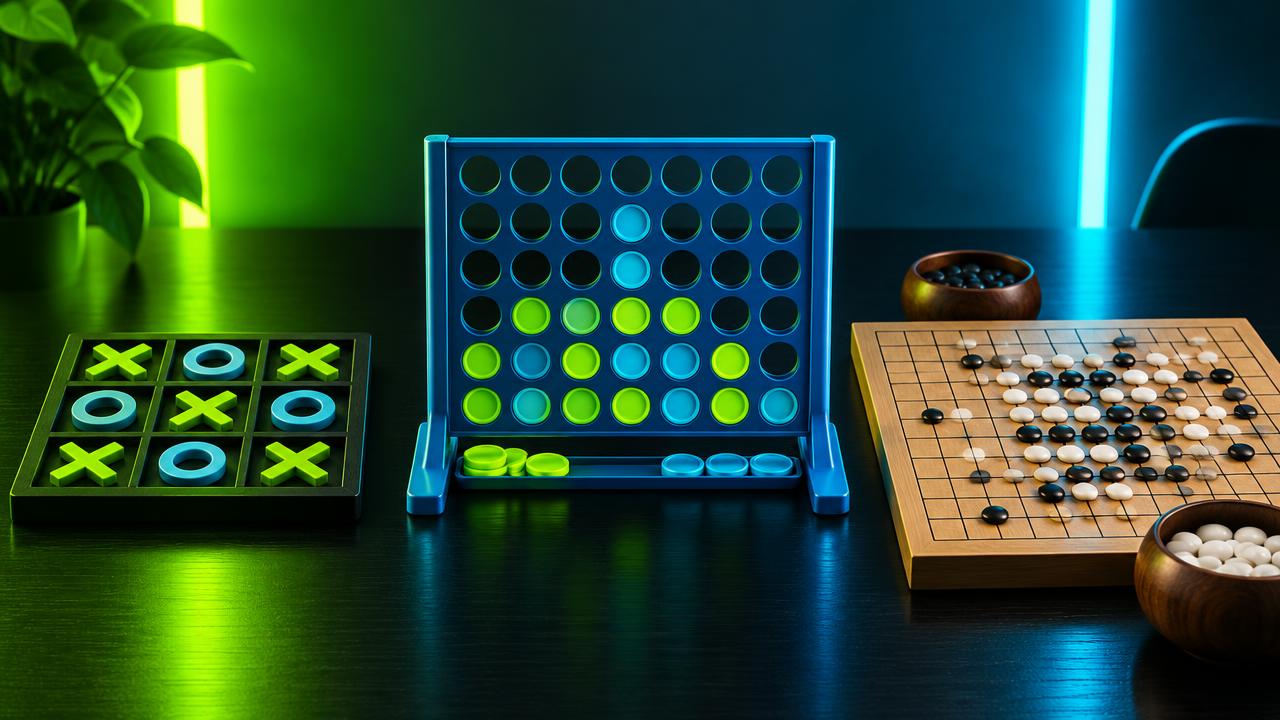
Tic-tac-toe, Connect Four and games with capture rules may share the idea of building a row, but their legal moves and victory conditions differ. Connect Four uses gravity, while ordinary Gomoku allows placement at any empty point. Go shares familiar equipment but uses a different territory-and-capture objective. These are not interchangeable names for one game.
If a game removes captured stones, drops pieces into columns or requires another objective besides five, identify that rule explicitly. A family resemblance can help you learn, but it should not hide the differences that determine the correct move. Asking one clear rules question is easier than discovering halfway through that both players are solving different problems.
Transfer tactics only after checking the variant
Basic scanning habits often transfer between five-in-a-row implementations. Look for immediate wins, immediate opponent wins, open fours and useful crossing points. Those habits are valuable even when the interface or game name changes. The geometric idea of a line is familiar, so you can start studying without relearning every coordinate.
However, a tactic that relies on an overline or a forbidden Black fork cannot be copied blindly into a restricted variant. Test the legality of the final move and any required continuations. A player who understands both the shared structure and the variant-specific limits will adapt more reliably than one who assumes every familiar board behaves exactly the same.
Use a short agreement before a friend game
Before playing, say the board size, whether five or more wins, whether captures exist and whether any moves are forbidden. Add the opening procedure if it is not ordinary alternating placement. For a local casual game, this can be a brief conversation. For online play, the game's displayed rule selection should provide the same agreement.
Then focus on the game itself. Different names are a useful bridge between players, not a reason to split one beginner lesson into many identical explanations. Once the rules match, the practical challenge is the same: read the opponent's threats, build your own connected lines and choose a move that respects what can happen on the next turn.
References
Frequently asked questions
Is Gobang another name for Gomoku?
Gobang is commonly used within the Gomoku or five-in-a-row family. The name alone does not tell you which exact rules or board size a particular game uses.
Do Omok and Wuziqi always use freestyle rules?
No. These names are associated with the five-in-a-row family, but implementations and local rules can differ. Check the stated rules rather than assuming a variant.
Which version does Gomoku.now use?
The default game is freestyle on a 15 by 15 board. Computer and local play also offer the site's Renju rules option; confirm the selection before starting.
Put it into practice
Try these ideas against the computer or a friend.
Editorial standards and sources
Rules depend on the variant being played. Worked examples are study positions, and computer suggestions are not proofs of perfect play. Consult the linked rule sources when checking a disputed position.
Topics
Share this article
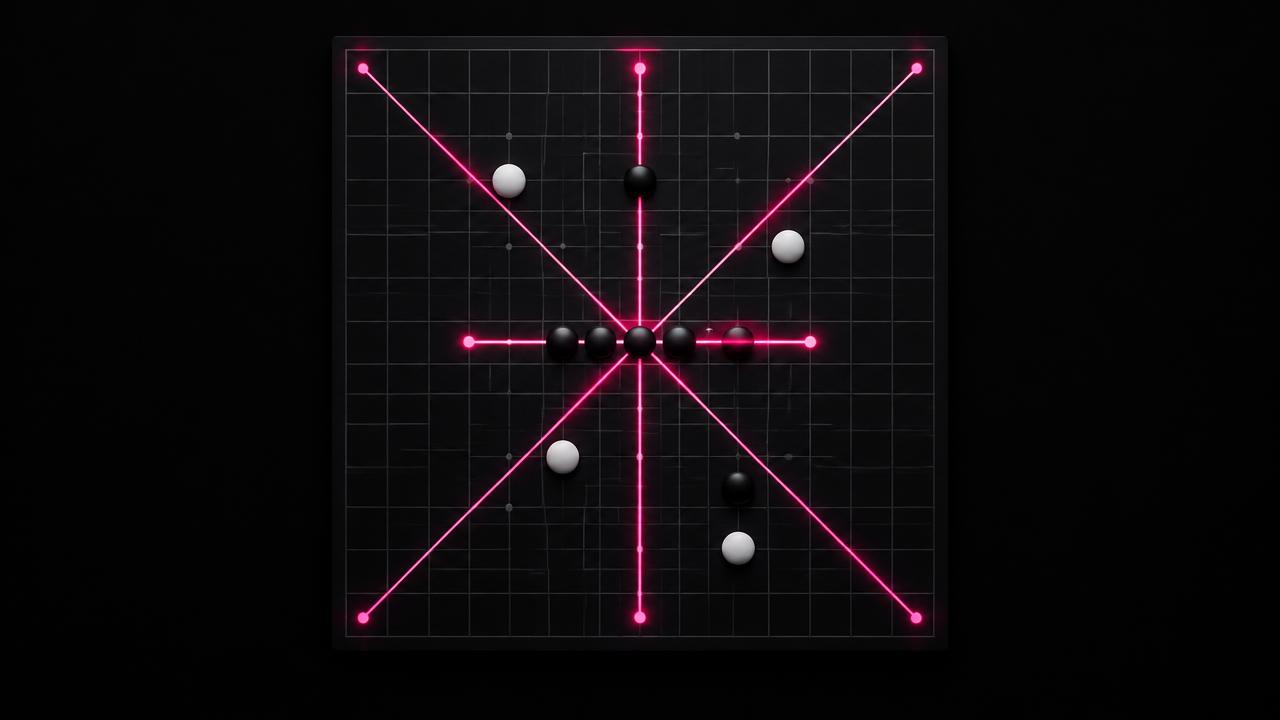
Read about the editorial byline, source selection and how to report a correction. Cover artwork is illustrative, not a record of the example position.