Key takeaway
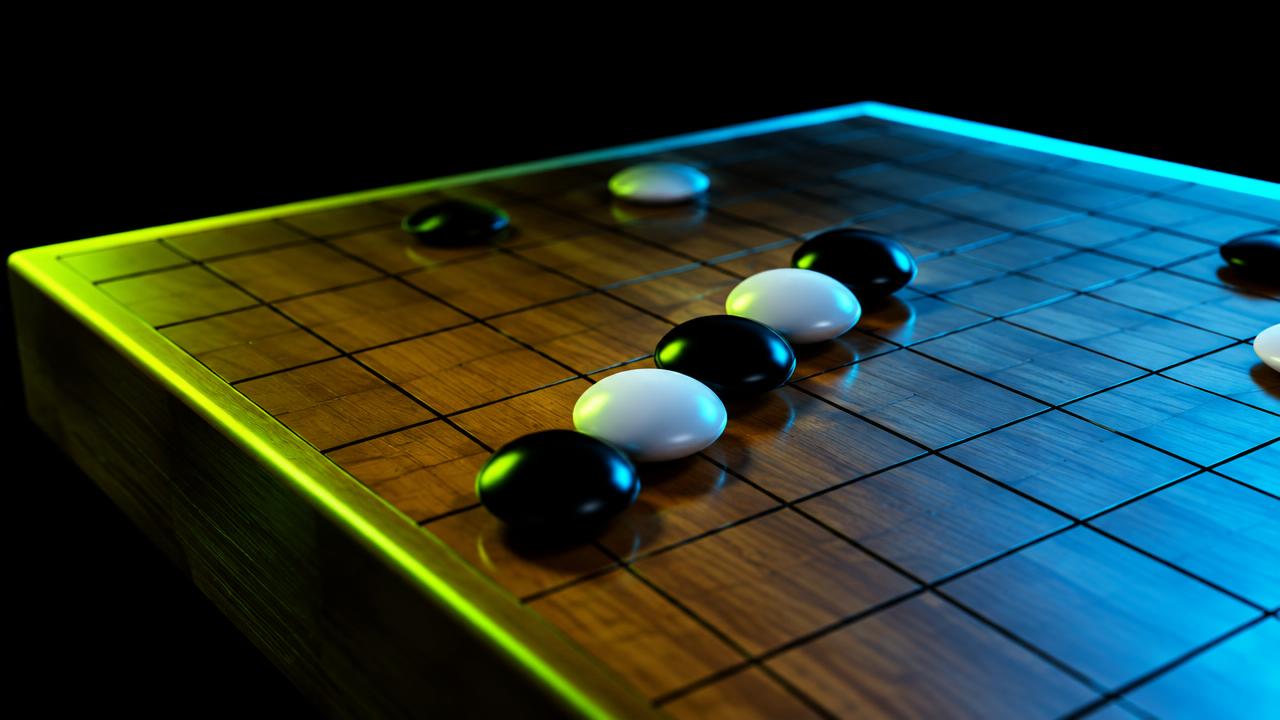
Gomoku grew out of games played on Go boards in East Asia, became popular in Japan in the late 1800s, and gained a balanced competitive form called Renju.
In this article
- Spread across Asia and beyond
- Renju and competitive play
- Solved, but still fun
- Gomoku today
- Timeline of five in a row
- Gomoku around the world
- What history teaches about strategy
- From the Go board to a game of its own
- The problem of the first move
- Computers and Gomoku
- Gomoku today
- Why the game has lasted
- Playing a piece of history
Gomoku has been played for centuries on the same boards and stones used for Go. Its Japanese name, gomokunarabe, roughly means 'five in a row'.
Spread across Asia and beyond
The game became widely popular in Japan in the late 1800s and spread to Europe, where it was known as Gobang in Britain. Its simple rules made it a favourite in schools and cafés.
Renju and competitive play
As players discovered that the first player had a strong advantage, Japanese players developed Renju rules in the early 20th century. The Renju International Federation was founded in 1988 and runs world championships.
Solved, but still fun
Computer analysis has shown that freestyle Gomoku on a 15×15 board is a win for the first player with perfect play. Humans are nowhere near perfect, which is why the game is still full of surprises.
Gomoku today
Today Gomoku is played everywhere, from paper grids to apps. Gomoku.now brings it to the browser with no download and no account: open a room, send the link, and play.
Timeline of five in a row
Gomoku around the world
The same game has many names. In China it is Wuziqi, in Korea Omok, in parts of Europe Piškvorky or Amőba, and in English "five in a row". Gobang, from the Japanese goban (Go board), is another common English name. Players from all of these traditions can sit down at the same board and play instantly.
What history teaches about strategy
Each rule change in Gomoku's history fixed the same problem: the first player was too strong. When you play freestyle on Gomoku.now, you are playing the original, unbalanced game. Notice how often Black wins against the computer, then try to win as White. That challenge is the whole reason Renju and Swap2 exist.
From the Go board to a game of its own
Gomoku grew up alongside Go. Both used the same board and the same stones, and for centuries players simply switched between them. Go is a game of territory and capture that takes hours. Five in a row is a game of lines and threats that takes minutes. That difference made Gomoku a favorite for quick games among people who already owned a Go set.
As Go boards moved from 17×17 to the modern 19×19, early Gomoku players used the larger board too. Over time players found that the smaller 15×15 board was enough space for the game and made openings easier to study, and 15×15 became the standard for serious play.
The problem of the first move
Once players began studying the game seriously, they noticed that Black won far more often. Japanese players introduced the first restrictions on Black, and those rules grew into Renju. The idea was simple: if the first player is too strong, take away some of their best weapons. In Renju, Black cannot make a double three, a double four or an overline, while White plays freely.
Even with those restrictions, analysis showed Black still held an edge. That led to opening rules that change who plays which color. In Swap, one player places the first stones and the other chooses a color. Swap2 extends this with an extra choice, and it is widely used in modern Gomoku tournaments today.
Computers and Gomoku
Gomoku became an early favorite for computer research because its rules are simple but its strategy is deep. Researchers proved that freestyle Gomoku is a win for the first player using threat-space search, a method that looks only at forcing moves instead of every possible move. Today, Gomoku programs are far stronger than any human, and annual computer tournaments still test new ideas in game AI.
Gomoku today
Modern Gomoku lives mostly online. Players can find an opponent anywhere in the world in seconds, practice against computer levels that match their skill, and review their past games move by move. Gomoku.now continues that tradition with a site made only for five in a row: casual games, live rooms with friends and ranked seasons for players who want to measure their progress.
Why the game has lasted
Few games combine such simple rules with such deep play. You can explain Gomoku to a child in one sentence, and you can study it for a lifetime. Its history is a long series of players discovering that depth and adjusting the rules to keep it fair.
Playing a piece of history
Every game you play on Gomoku.now uses the same core idea players enjoyed on wooden Go boards generations ago: five stones in a line. The board is digital now and your opponent might be on another continent, but the tension of spotting a threat one move before your opponent does has not changed. If you want to feel the history directly, try a game as White against the Hard computer. You will quickly understand why so many rule makers spent so much effort taming the first move, and why balanced openings became such an important part of the modern game. Then read our rules guide to see how freestyle, standard and Renju differ in practice.
People call it Gomoku, Gobang, Wuziqi or Omok, and they all play by the same simple rules. Those rules have barely changed in generations, and more people find the game online every year.
Play a game today and you become part of that long story, one stone at a time, on a board that has entertained players for generations.
Frequently asked questions
What does Gomoku mean?
It comes from the Japanese gomokunarabe, meaning roughly 'five pieces in a row'.
Is Gomoku solved?
Freestyle Gomoku on 15×15 has been shown to be a first-player win with perfect play, but no human plays perfectly.
Why is Gomoku also called Gobang?
Gobang comes from goban, the Japanese word for the Go board the game was traditionally played on.
What is Gomoku called in China?
Wuziqi, which means "five chess pieces".
Put it into practice
Try these ideas against the computer or a friend.
Editorial standards and sources
Rules depend on the variant being played. Worked examples are study positions, and computer suggestions are not proofs of perfect play. Consult the linked rule sources when checking a disputed position.
Topics
Share this article
Read about the editorial byline, source selection and how to report a correction. Cover artwork is illustrative, not a record of the example position.