Key takeaway
Defend the opponent's actual continuation, then compare blocks that also improve your own lines. The first visible endpoint is not always the best defensive point.
In this article
- Separate immediate losses from future danger
- Take your own immediate win when available
- Count all the winning endpoints
- Compare the available blocks against a three
- Block the junction, not every branch
- Ask what the attacker gains from your block
- Keep your stones connected enough to counterplay
- Use counter-threats carefully
- Review defensive mistakes by their timing
- A useful defense-first practice session
Good Gomoku defense does more than place a stone at the end of the opponent's longest row. It identifies what the attacker can do next, removes the dangerous continuation and, when possible, leaves the defender with useful connections. A block that serves your own position can change the game. A series of isolated blocks can keep you alive briefly while the opponent builds a stronger attack.
This guide focuses on freestyle Gomoku. The same defensive questions remain useful in other variants, but the legality of a completion can change, especially for Black in Renju. Before deciding that a threat is forcing, check that its promised winning move actually qualifies under the rules you are playing.
Separate immediate losses from future danger
Your first task is to find the opponent's immediate winning points. A consecutive four with an open end is one obvious example. A broken four with an internal gap is another. These threats are more urgent than an ordinary three because the next opponent move ends the game if you leave the completion available.
Suppose White has e8, f8, h8 and i8. The winning point is g8, not an outer endpoint. Black at d8 does nothing to prevent White from filling the gap. This example shows why a defensive scan must examine five-point windows as well as the longest consecutive run. The missing internal stone can be the only point that matters.
Take your own immediate win when available
Defense is not always the correct response to a threat. If you can make a legal five right now, the game ends before the opponent takes another turn. New players sometimes become so focused on blocking that they overlook their own completion. Begin every turn with your winning points, then examine the opponent's.
This does not mean that any counterattack is sufficient. Creating a four is slower than making five. If the opponent can already win, your new four will not force a block because they can finish the game instead. Be precise about the difference between an immediate win and a move that merely threatens one.
Count all the winning endpoints
Against White at f8, g8, h8 and i8 with e8 and j8 empty, Black cannot save the horizontal line by occupying one endpoint. White wins at the other. The position has already reached an open four. If Black has no immediate win elsewhere, the useful review starts earlier, before White's fourth consecutive stone.
Do not blame the final block for failing to do the impossible. Instead locate the earlier three and ask which moves could have prevented the open-four extension. This changes your analysis from searching for a miraculous rescue to finding the missed defensive opportunity. That distinction makes losses much more useful for training.
Compare the available blocks against a three
Use White at f8, g8 and h8 with room around both sides. Black can consider e8 or i8, among other tactical possibilities. Both interfere with the straightforward open-four plan, but they are not necessarily equally good. One might connect Black stones on a diagonal while the other leaves Black isolated.
Imagine Black already has c6 and d7. A Black stone at e8 extends that diagonal toward f9 and g10. It blocks one side of White's row and supports Black's own development. Before choosing it, still check White's replies on the other side and any nearby crossing threats. A double-purpose block is useful only if it handles the urgent problem.
Block the junction, not every branch
If several opponent lines depend on the same empty crossing point, occupying that point can prevent an entire fork. Waiting until the opponent plays there may leave you facing multiple forced responses. Inspect empty intersections near clusters where a horizontal line meets a vertical or diagonal plan.
For a training example, place White at f8 and h8, plus g6 and g7. The empty g8 would connect the horizontal stones and extend the vertical pair. The exact threat depends on additional support and endpoints, but g8 is clearly worth examining. A defensive stone there may be more efficient than placing separate stones at the outer ends of each small group.
Ask what the attacker gains from your block
Sometimes the opponent makes a four partly to force your stone onto a particular point. That point may close your future line or leave a crossing square undefended. A forcing move is not only an attempt to win immediately; it can arrange the next position. You should therefore inspect the board after your required reply.
If the block is genuinely forced, you may have no alternative this turn. But recognizing the planned continuation tells you what comes next and where the earlier error occurred. During review, replay the forced block and identify the opponent's next useful move. Then go backward and test whether a different quiet defense could have prevented the sequence from starting.
Keep your stones connected enough to counterplay
A defensive stone near your existing groups can later become an attacking stone. This is one reason central connections matter even when you are under pressure. You are not trying to win territory, but you do need lines with enough space to grow. Scattered single stones make it harder to produce a threat after the opponent's attack slows down.
Avoid turning this principle into a rigid rule. If the only move preventing five is far from your stones, you must still consider it. Urgency comes first. Connection is a way to choose among safe defenses, not an excuse to ignore a winning completion because its block would look awkward.
Use counter-threats carefully
A counter-four can sometimes interrupt an opponent's slower attack by requiring an immediate answer. This is a concrete tactical resource, not a general instruction to keep attacking. Verify that the opponent cannot finish five now and that your own four has a real legal completion. Then calculate their block and your next defensive obligation.
If you create a counter-four but the required opponent block also completes their stronger plan, you may have gained nothing. Likewise, a four with no valid endpoint is not forcing. Write down the candidate sequence during study. Counterplay is useful when the actual moves buy time or change the threat structure, not merely when both sides have long rows.
Review defensive mistakes by their timing
After a loss, distinguish three types of mistake. You may have missed an immediate completion, chosen the wrong block among several safe-looking options, or allowed a fork to form when it could still be prevented. Each requires different practice. Immediate-completion errors need scanning drills. Bad block choices need comparison of replies. Late defense needs attention to crossing points and developing threats.
Pick one moment rather than rewriting the whole game at once. Rebuild the position, list two candidate defenses and test the opponent's strongest response to each. If neither works, move back one turn. Continue until you find a decision with a meaningful alternative. That is the position worth keeping in your training notes.
A useful defense-first practice session
Play a local exercise where one side receives a three with clear continuation space. Your task is to choose a block and explain which future open four it prevents. Add a supporting diagonal stone and repeat. The best defense may change when the blocked line is no longer the only plan.
Finish with a normal computer game in which your goal is to notice every immediate opponent win. Count success by correct recognition, not by the final result alone. Stronger defense gives you more turns to develop your own ideas, but it begins with a modest habit: identify the actual threat before deciding where your stone should go.
Frequently asked questions
Must I always block four stones in a row?
If they have a legal winning completion and you cannot win immediately yourself, you must stop that completion. Check for gaps and additional winning points too.
Can one move block two threats?
Sometimes. A shared gap or crossing point can stop both plans. Count the continuation points rather than assuming two lines require two blocks.
Why do I lose even after blocking every threat?
Your blocks may be forced by an attack that became decisive earlier. Review the position before the opponent's fork or open four, when you still had more choices.
Put it into practice
Try these ideas against the computer or a friend.
Editorial standards and sources
Rules depend on the variant being played. Worked examples are study positions, and computer suggestions are not proofs of perfect play. Consult the linked rule sources when checking a disputed position.
Topics
Share this article
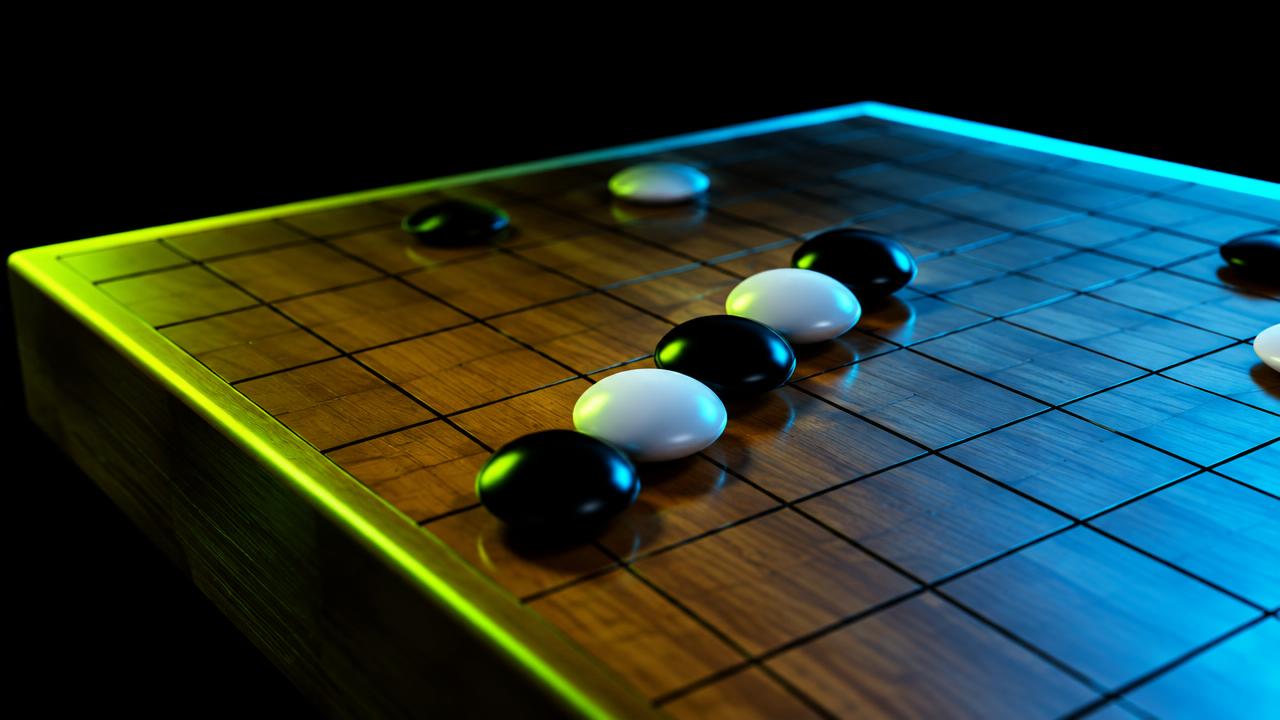
Read about the editorial byline, source selection and how to report a correction. Cover artwork is illustrative, not a record of the example position.